Guide 04 / Material culture
Jewelry materials and gemstones.
Compare appearance, workability, finishing, and care without treating material as a guarantee of value.
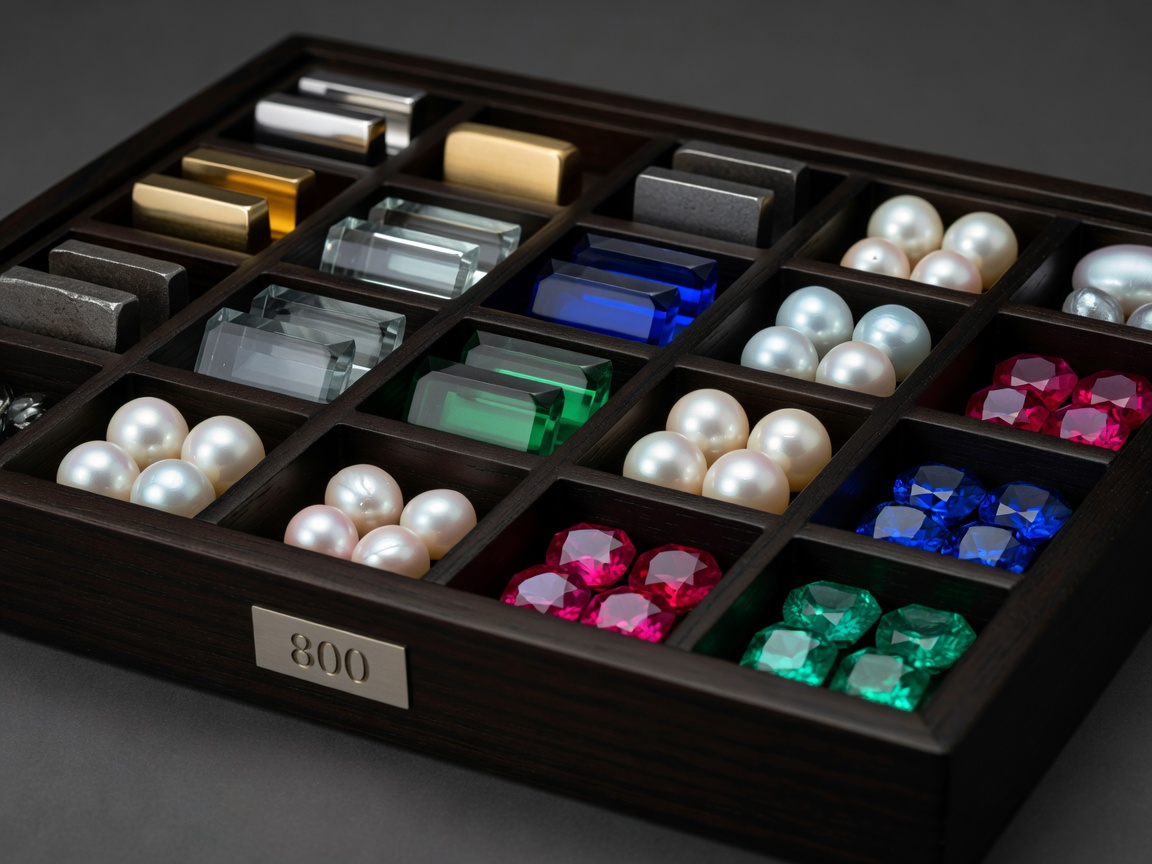
Material index
Material is a design decision.
Color, hardness, density, malleability, surface response, and availability influence an object. Alloy, treatment, setting, and use also matter.
Care advice should follow the specific material and finish. General labels are starting points, not guarantees.
Metals
Gold
Gold is workable and resistant to corrosion. Jewelry commonly uses alloys that change color, hardness, and karat content. White, yellow, and rose appearances depend on composition and finish.
Silver
Silver is bright, workable, and widely used. It can tarnish through surface reaction with the environment. Polishing and storage choices affect its appearance.
Platinum
Platinum is dense and naturally pale. It is used for jewelry and can develop a surface patina. Professional assessment is useful when finish or setting condition matters.
Copper and brass
Copper has a warm red tone. Brass is a copper alloy, often yellow in appearance. Both support decorative work and may change surface color through oxidation, wear, or applied finish.
Surface materials and stones
Enamel and glass
Enamel is a glass-like material fused to a surface. It can produce opaque or translucent color but may chip under impact. Glass can be shaped, colored, or used as a bead and should not automatically be confused with a gemstone.
Pearls
Pearls are organic materials with a relatively soft surface compared with many gemstones. Cosmetics, abrasion, and prolonged moisture can affect appearance. Storage away from harder objects is sensible.
Diamonds and colored gemstones
Diamonds are crystalline carbon. Colored gemstones include many mineral species with different hardness, cleavage, treatments, and care needs. A stone’s appearance alone does not establish origin, treatment, or quality.
Synthetic and reclaimed materials
Synthetic stones are laboratory-created materials with related or equivalent chemical composition to some natural stones, depending on the specific material. Reclaimed metal, antique components, recycled glass, and found materials can support new work. Claims about ethics or sustainability require evidence.
Good for
Use this guide when comparing object descriptions, planning questions for a maker, or deciding what care information to request.
What to know
Ask about alloy, treatment, repairs, coatings, and setting. Avoid unsupported assumptions about durability, rarity, investment, or environmental impact.
Next: plan the district visit.
Turn material interests into a practical route.
Plan a trip